
From Theaters To Thumbnails
How building films for theaters helped me find creative freedom on YouTube.

Like most directors, I have an inciting moment, that spark that made me want to become a filmmaker. For me, it was seeing Hook in the East Hampton Regal Cinema. I could easily maintain an entire weekly Substack about why that film is amazing and how it changed my life. But I won’t. Yet.
I was lucky enough to have my first feature, DATING & NEW YORK, play in 50 select theaters around the country, including the iconic IFC Center, where it premiered. It was magic, nothing short of that. Seeing the film on a big screen with surround sound for the first time, it played way better than I remembered it looking and sounding on my laptop. But beyond that, there was an emotional connection one I’ve heard echoed by fans of the film. People have written to me saying they saw it when they first moved to New York City or on a first date, and how they now associate those memories and emotions with seeing the film in theaters. There is no higher honor or praise.
When you pursue the great white shark of feature filmmaking, you're sold a dream: your movie on a marquee, buying your own ticket to save in a scrapbook, a line wrapped around the block on opening night. That dream is harder than ever to realize. Smarter people than me can break down the reasons like changing theater habits, the rise of streaming, inflated budgets but let’s just say this: getting your film in a theater is a miracle. And these days, it’s rarely financially rewarding for the creator in the long term.
Still, I stand firmly in the belief that nothing beats the theatrical experience. Watching a movie on a big screen with surround sound, eating popcorn (with plain M&M’s) is how memories are made. It’s not just about the film itself—it’s about the experience. Maybe you remember seeing Jurassic Park with your dad. Or Anchorman on a first date with your ex-Sarah. Theaters are magic. And when possible, they should be a stop on your film’s journey.
Now, after making five feature-length films—four completed—the biggest challenge I see in the industry is distribution.. My subway take is that it’s going to take a billionaire to disrupt the system. Someone who can build a new model that gives filmmakers and artist upside, extends a film’s theatrical life, and finds a way to make online and theatrical releases feel significant. That’s why you’re seeing private equity-backed distributors like A24, Neon, and MUBI thriving. Of course, you must also have taste.
But this post isn’t about that. This post is about how great YouTube is for filmmakers.
My first internship was at Frederator, under animation legend and mentor Fred Seibert, working on one of the first-ever YouTube multichannel networks: Next New Networks. That’s where I learned about thumbnails, watch time, and end cards. The office was filled with like DV tapes and American Apparel, and it was full of creators making cool stuff. Still, I didn’t think it was filmmaking.
The dream was always theatrical feature-length films. So, even after a stint at BuzzFeed in 2015 doing many of the same things I learned at Frederator, I was still clawing my way back toward that dream. Back to making movies that played in theaters.
For a long time, I thought YouTube was cool—but not cinema. I was wrong. YouTube is NOT cinema but cinema can exist on YouTube.
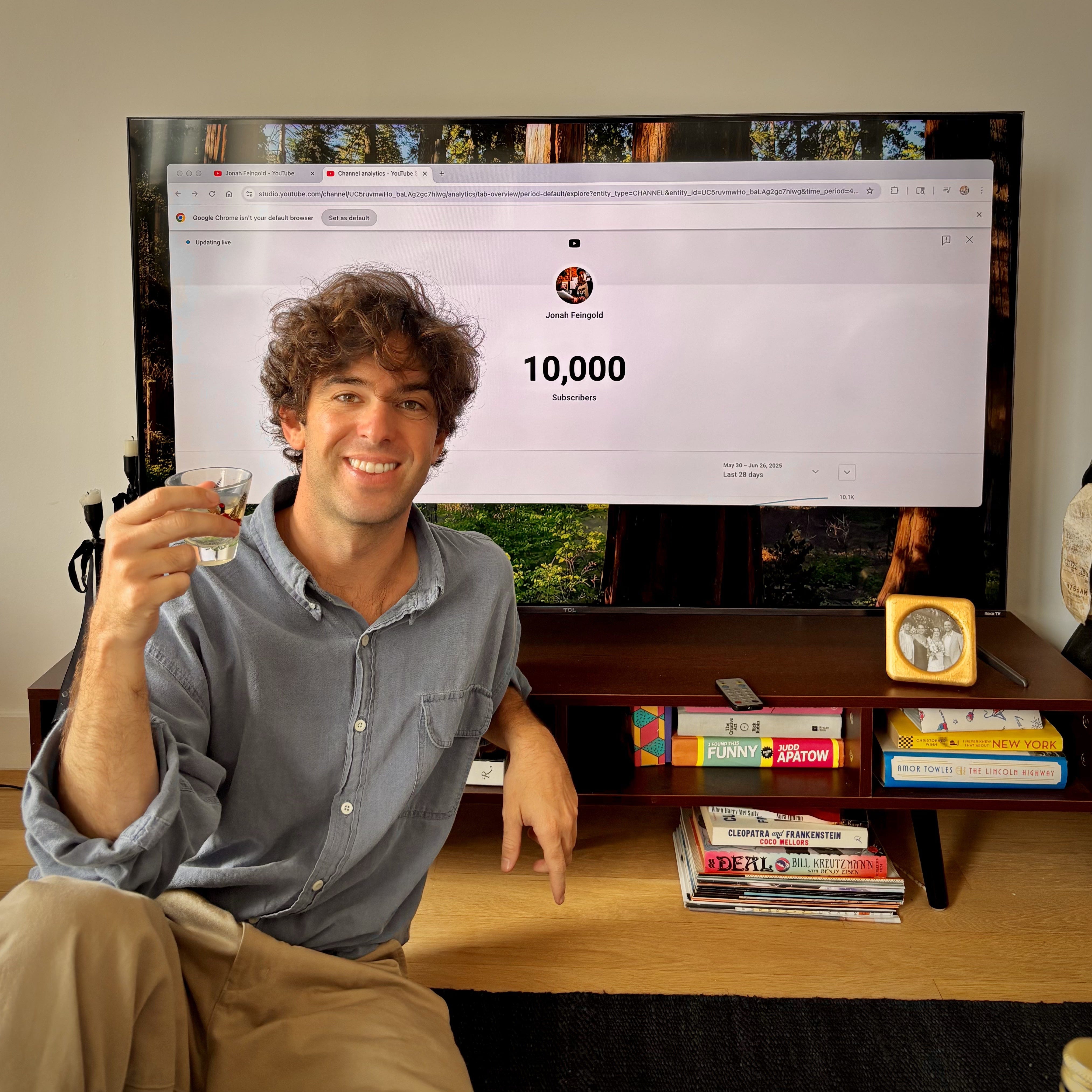
I just passed 10,000 subscribers on my new YouTube channel. To me, that number feels massive—even if a commenter pointed out it’s “not that much.” - I took the time to celebrate.
Making a feature film is hard. But it’s not as hard as lining up everything that enables you to make one: raising money, aligning actor schedules, locking in locations, managing egos, solving logistical nightmares. If all of that aligns? Making the actual movie is still hard—but also fun. (More on that in another post.)
Some artists keep journals. I make videos. They’re journal entries, sketches, ideas—snippets of dialogue, a shot I want to try, a song I love, or a feeling I can’t shake. These often begin as 9:16 Reels on Instagram.
On a whim, I decided to ditch the 9:16 and upload one of them to YouTube.
One of those videos took off. It got views—but more importantly, comments and engagement that reinforced something I deeply believe: 1) that YouTube is a platform that actually lacks a lot of original scripted content and will reward it if its done well - and more important 2) audiences miss the romantic comedies of yesteryear. They’re hungry for will-they-won’t-they stories, for two people talking about love and sex with as much comedy as there is romance. There’s a little weight to what we’re making too—our wardrobe, camera angles, and general nostalgic mise-en-scène are no accident.

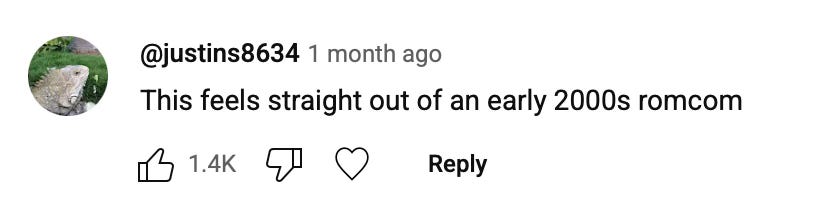
It’s hard to describe how creatively fulfilling it is to build a community on YouTube. The only thing that matters is making something good. Something that feels honest and meaningful—whatever the scale. I don’t have to care so much about opening my video with a “hook” or trying to figure out how to frame a two shot that can really one fit one person - a la a phone screen.
Now, about making money on YouTube: much like how tax credits are hyped in the indie film world, ad revenue is a little… misleading. It’s tough to make real money from ads alone. But the potential lies in brand partnerships, audience calls-to-action (like a Patreon or ticket sales), and meaningful engagement. YouTube has higher engagement than TikTok or Instagram—and while Substack still wins on depth, YouTube fosters a para-social bond that’s hard to beat. What do I mean? If you ask your audience on Instagram to click a link to buy a ticket, I’d guess 1-2 percent of your viewers (people who view your story, which is already a small percentage of your followers) will buy one. On YouTube - the rate of engagement is higher.
My thesis—shared by many—is that brands are about to double down on long form storytelling. Soap operas were created to sell soap after all.
I don’t think YouTube is coming for TV or for movies - that comparison doesn’t feel right yet. In general, you don’t show up to work on Monday to discuss the latest video you watched, but you might talk about White Lotus, or your thoughts on the latest Jurassic Park. In that same vein, I don’t think you watch a YouTube video that makes you want to become a filmmaker, but you could watch Sinners be inspired to change the course of your life to become a creative.
A producer asked me if I was worried that making films for YouTube would diminish my brand as a filmmaker — but the reality is I don’t think I’d have a brand if it weren’t for the web. Romantical (my company) isn’t just about romantic comedies; it’s about meeting audiences where they are, whether that’s in a theater on a Friday night or on a phone screen between subway stops.
The plan is to keep building: develop and incubate original IP on YouTube—real IP, with characters, stories, and perspective. Then, bring those to feature-length life.
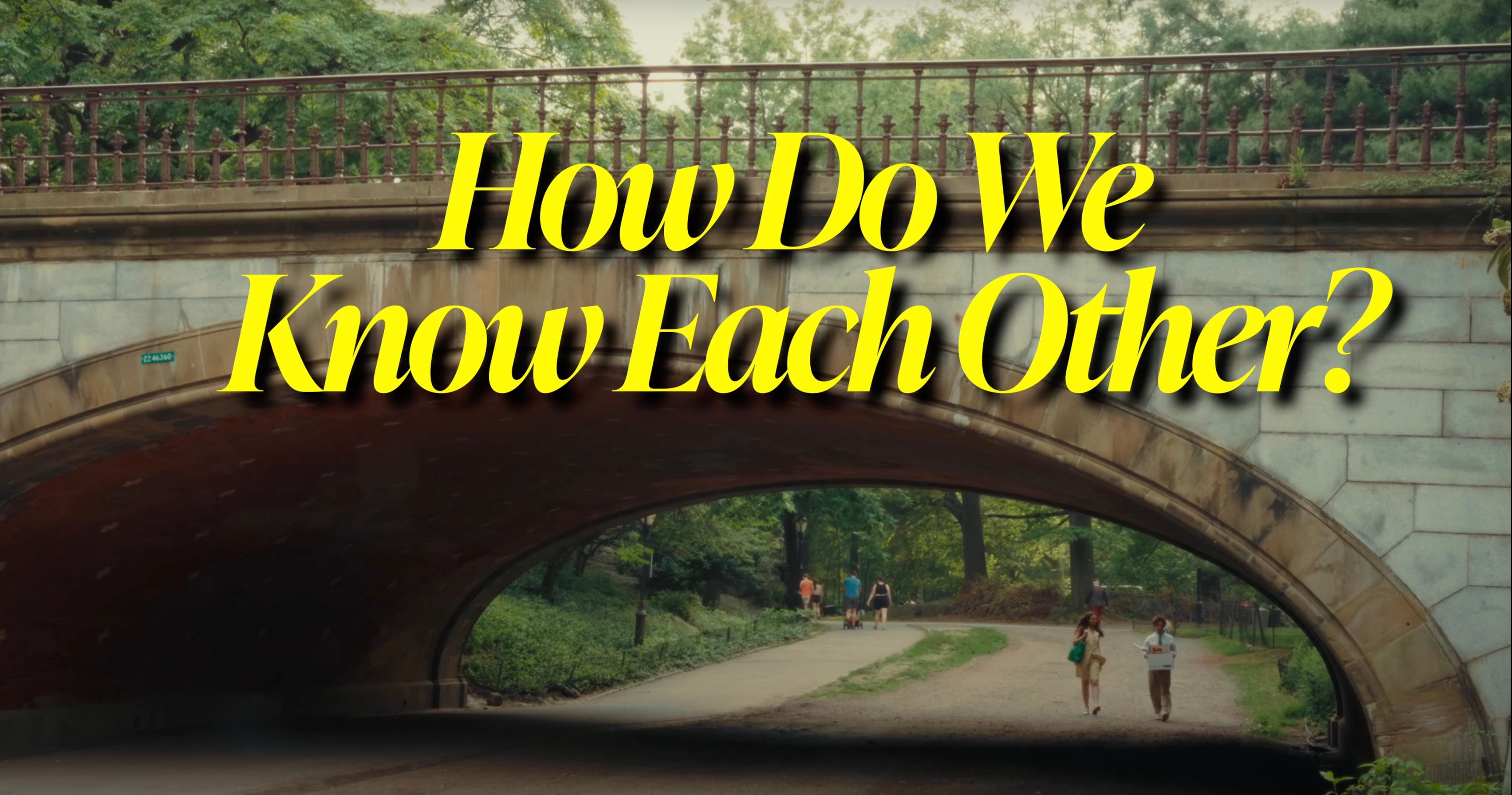
The first film is called “GOOD TO SEE YOU” about two friends that run into each other in Central Park - but don’t remember how they know each other. We have a sold out screening of the film this month, and have amassed millions of views on our social clips so far.
That’s the dream.
Should you feel inclined, you can watch all the work in the below playlist (best viewed on your TV!)
Link: The Helpless Romantics
much love,
Jonah
you’re my movie guy <3
Love this, and love learning more about filmmaking in the internet/social media age!!❤️